This website uses cookies, Google Analytics and social media plugins. Under 'Privacy policy', you can learn more about how we use them and how we process your personal data.
There you will also find more information about how you can change your settings. By continuing to use our website, you consent to the corresponding processing of your personal data.
Our Vision
AVINA Stiftung nurtures systemic change by empowering pioneers who reshape our connection to nature, consciousness, and community.
Our values
Project Partners
Who we are
Dr. Viktoria Schmidheiny
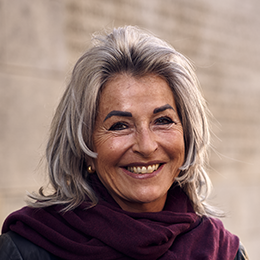
Chair of the board
Marcel Nauer
Member of the board
Amadeus Zschunke
Member of the board
Christoph Weichselbaum
Managing director
Laurenz Werner
Managing Director
Gina Wiestner
Program Manager
Donor
Dr. Stephan Schmidheiny, founder of Avina Stiftung, is an entrepreneur, sustainability pioneer and philanthropist. Over several decades, he became one of the leading voices in the international debate on sustainable development, advancing responsible business practices and pioneering new approaches to social change.
Swiss Industrial Heritage and Vision
Born in 1947 into Switzerland's Schmidheiny family, Stephan Schmidheiny inherited a complex industrial legacy. After completing his law doctorate at the University of Zurich in 1972, he assumed leadership responsibilities within the Swiss Eternit Group at the age of 28.
At a time when scientific understanding of asbestos-related health risks was still evolving, he launched a comprehensive innovation programme in 1976 to develop asbestos-free products and invested heavily in workplace safety, employee protection and the modernisation of production facilities. The first asbestos-free products entered the market in the early 1980s, and by the mid-1980s a large share of the Swiss Eternit Group's output was already being manufactured without asbestos — years before the first national bans came into force in Europe from 1990 onward (Switzerland in 1990, Italy in 1992, Germany in 1993) and well over a decade before the European Union introduced its ban in 2005. To this day there is no global prohibition: the processing and use of asbestos remains permitted in roughly two-thirds of the world's countries.
These experiences shaped a conviction that would guide his later work as an entrepreneur, sustainability advocate and philanthropist: that economic success, social responsibility and environmental stewardship must be pursued together.
Global Environmental Leadership and Innovation
Stephan Schmidheiny did not create the asbestos industry he inherited. As a fourth-generation industrial entrepreneur, he assumed responsibility for businesses operating in sectors where asbestos had long been regarded as a standard industrial material around the world.
Following the transition away from asbestos, he sold all holdings of the Swiss Eternit Group and embarked on a new entrepreneurial chapter. Over the following decades, he built and developed a diversified portfolio of companies in sectors including construction materials, forestry, manufacturing, finance and technology.
Among his most notable investments was the 1985 restructuring of SMH, today's Swatch Group, alongside Nicolas Hayek. Their involvement helped lay the foundations for the revival of the Swiss watch industry during one of the most challenging periods in its history.
In Latin America, he became a pioneer of sustainable business. Through GrupoNueva and companies such as Masisa, he built a business model that combined strong economic performance with environmental and social responsibility, years before sustainability became a mainstream corporate objective.
The success of these entrepreneurial ventures created the financial foundation for his philanthropic activities and ultimately for the establishment of Avina Stiftung and Fundación Avina.
His influence extended beyond business. In 1990, he was invited by the Secretary-General of the United Nations Conference on Environment and Development to bring a business perspective to the preparations for the 1992 Rio Earth Summit. He founded the Business Council for Sustainable Development, which in 1995 became the World Business Council for Sustainable Development (WBCSD), and helped introduce the concept of eco-efficiency. His book Changing Course, presented at the Rio Earth Summit, became an important reference in the emerging field of sustainable development.
Founding Avina Stiftung
In 1994, Stephan Schmidheiny established Avina Stiftung on a powerful idea: that entrepreneurial thinking, applied with discipline and long-term commitment, can help solve complex social and environmental challenges.
Under his chairmanship, Avina Stiftung became a leading advocate for entrepreneurial philanthropy, backing a wide range of initiatives in sustainable development. His approach was that of a social entrepreneur — applying entrepreneurial thinking and methods to social and environmental goals, seeking a return measured in societal value rather than financial gain. In 2001, Fundación Avina was established as an independent Latin American organisation, reflecting his conviction that lasting solutions are most effective when developed close to the communities they serve.
Adapting to New Challenges
In 2017, Stephan Schmidheiny stepped down from active board participation. Under the leadership of his wife Dr. Viktoria Schmidheiny, Avina Stiftung sharpened its focus on healthy and sustainably produced food in Switzerland and Europe.
This evolution reflects a principle that has guided the foundation since its inception: philanthropic organisations should adapt to changing societal needs while remaining true to their core values. Today, Avina Stiftung supports initiatives that promote sustainable agriculture, healthy nutrition and a resilient food system.
Leadership Philosophy and Legacy
Today, Avina Stiftung continues its work under the leadership of Dr. Viktoria Schmidheiny, guided by the values and vision that inspired its founder.
Throughout his career, Stephan Schmidheiny has sought to build bridges between entrepreneurship, sustainability and philanthropy. His work reflects the belief that long-term progress depends on the ability to align economic development with social and environmental responsibility.